Unisart® Nitrocellulose Microarray Slides for High‑Sensitivity Protein- and Multiplex-Assays
Backed by Sartorius’ industrial membrane expertise, Unisart® Microarray Slides provide reliable, reproducible performance for advanced diagnostics. Each borosilicate glass slide is coated with a thin, microporous nitrocellulose membrane that rapidly adsorbs proteins, preserves native conformation and activity, and delivers consistently low background.
- Uniform binding and reproducible spot morphology driven by tight ±1 µm membrane thickness tolerance
- Validated robotic manufacturing for reproducibility and lot-to-lot consistency
- Flexible pad formats for forward and reverse phase protein arrays - even at femtogram-to-picogram levels
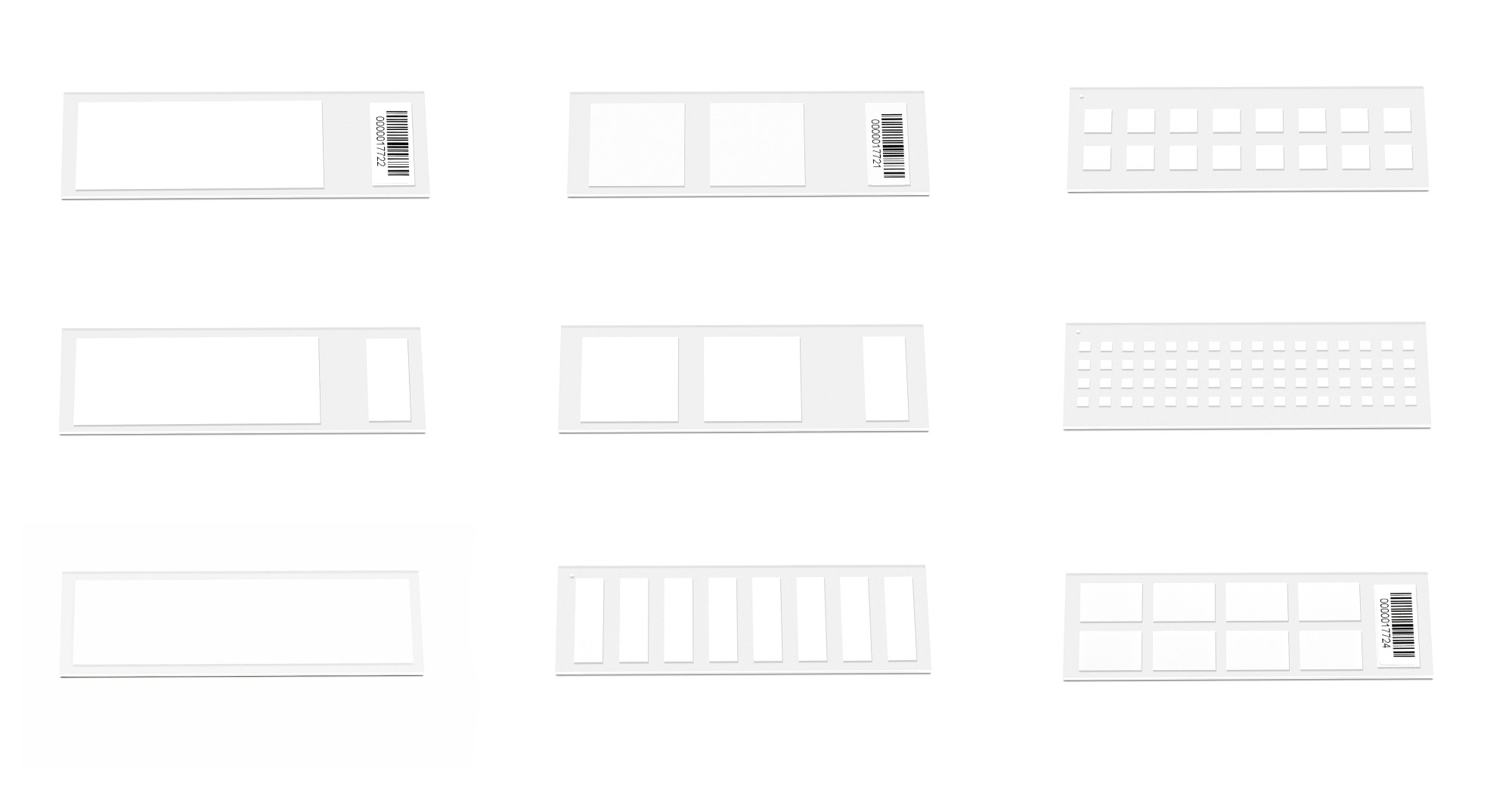


Validated robotic manufacturing ensures exceptional intra- and inter-lot consistency, and continuous production yields large, uniform batches.
A very tight thickness tolerance and the homogeneous microporous membrane deliver uniform spot geometry and consistent spot intensity across the slide.
The microporous structure increases effective surface area and binding capacity, enabling a high signal-to-noise ratio (> 50) at very low protein concentrations (pg-fg). Exceptionally low background and extremely low autofluorescence produce clean baselines, broader dynamic range, and consistent, reliable quantitation.
Unisart® Microarray Slides offer seamless compatibility with a wide range of detection systems, including fluorescent, chemiluminescent, colorimetric and radioisotopic methods. They are designed to work with standard microarray spotters and scanners for efficient dispensing and reliable imaging across diverse platforms.
All Unisart® Microarray Slides are developed and produced in Göttingen, Germany under an ISO 9001 certified Quality Management System. All membrane products undergo rigorous in-house testing to meet our stringent quality standards.
Resources

Frequently Asked Questions
Unisart® Microarray Slides use a thin, microporous nitrocellulose membrane on borosilicate glass, optimized specifically for protein arrays. The membrane enables rapid, chemistry-free protein adsorption, preserves protein conformation and activity, offers high binding capacity, and maintains intrinsically low background with uniform spot morphology.
Standard glass slides used for DNA microarrays are typically functionalized (e.g., amine, epoxy, aldehyde) for covalent coupling of nucleic acids. Proteins are more fragile and heterogeneous than DNA; they can lose activity on these surfaces, often require additional chemistries and blocking steps, and may show lower binding capacity and less consistent spot quality.
Proteins are structurally heterogenous and easily denatured. Microporous nitrocellulose allows rapid, chemistry-free adsorption while maintaining native protein conformation and activity better than typical glass surfaces designed for DNA arrays.
Unisart® Microarray Slides generally support more than 15,000 active spots per slide, depending on layout and printing parameters. Actual capacity varies with spot diameter, margins, microarray printer alignment, humidity and detection method.
Yes, we offer custom pad sizes and layouts within the standard slide dimensions (75.6 × 25.0 mm), including optional barcoding. Prototypes are available with minimum order quantities. For detailed discussions on pad geometry, quantities, and labeling options, please contact us at unisart@sartorius.com.
The membrane is nominally 12.5 µm thick with a specified tolerance of ±2.5 µm. Validated robotic manufacturing delivers tight thickness uniformity with up to only ±1 µm variation across the slide. This consistency yields in reliable protein adsorption and binding capacity, uniform spot morphology and intensity (lower intra-slide CVs), and better lot-to-lot reproducibility. The result is cleaner baselines and more reliable quantitation, especially at low target concentrations.
Unisart® Microarray Slides are compatible with virtually all common detection methods, including fluorescent (visible and near IR), chemiluminescent, chromogenic/colorimetric, and isotopic imaging. Choose the method that best fits your assay and instrumentation.
No, it is not recommended to reuse Unisart® Microarray Slides. The microporous nitrocellulose membrane adsorbs proteins in an effectively irreversible manner; the harsh conditions required to remove bound analytes or detection reagents can damage the membrane, reduce binding capacity, and increase background, compromising data quality.
It is recommended to store Unisart® Microarray Slides at a constant temperature between 15–25 °C and a relative humidity between 40 – 60 %. Keep the slides away from open flames, heat sources, light, and chemical vapors of any kind. Store article within original and closed packaging.
If stored according to our storage recommendations, Unisart® Microarray Slides have a shelf-life of one year after their manufacturing date. The shelf-life is indicated on each Certificate of Analysis.
Sartorius offers different pad formats within the Unisart® Microarray Slide portfolio with different labeling options. Download the brochure
Some of the products are available on the Sartorius eShop and can be ordered online (OEM-Membranes). If your desired format is not included, please contact our team via unisart@sartorius.com for more information about customized dimensions.