Spring Cleaning Strategies for Your Biopharma Pipeline
Spring is in the air! For many of us, this signals a time for deep cleaning our homes and any spaces we’ve neglected during the winter months. But for scientists, deep cleaning doesn’t need to be a daunting once-a-year task. High-quality data requires a continually spotless workflow, from routine cleaning of lab equipment to microbial monitoring. Today, we’re looking at contamination control strategies in the biopharma pipeline and how to streamline cleaning processes.

Building a Good Culture
Cell-based bioprocesses are especially vulnerable to contamination due to nutrient-rich media, partly open systems, sensitive growth conditions, frequent handling, and long culture periods. A good contamination control strategy first identifies the sources of contamination. These include all the reagents and supplements used in media preparation, the equipment used in the cell culture process, and even laboratory air and water. Next, it identifies appropriate mitigation strategies to prevent contamination or catch it early. The key to this is having access to solutions that are reliable and tailored to meet phase-appropriate requirements throughout the pipeline transition.
Rapid Testing for Microbial Contamination
In cell culture, a lot of effort is concentrated around keeping cell lines free of microbial contamination. Contamination like mycoplasma can disrupt protein expression, cell growth, and RNA and DNA synthesis, producing inconsistent bioproducts. Regular testing is a proactive way to catch contamination early, before it becomes a systemic problem.
Common testing methods fall into two categories: rapid PCR-based methods and traditional culture-based methods. Of these, the latter can take 28 days until a contamination can be ruled out completely, which is too long in some instances. Rapid, real-time PCR-based tests, on the other hand, can produce results in a few hours.
Mycoplasma Removal by Sterile Filtration
Sterile filtration is an effective way to remove microbial contaminants when autoclaving is not an option. This is the case when preparing culture media from solid powder since heat can degrade essential nutrients and cofactors in the media. Mycoplasma, however, can slip through standard 0.22 μm membranes, so a 0.1 μm pore size filter is the best choice.
Slow flow rates are one of the top complaints in filtration. Some products successfully address this problem by increasing the filtration area, making filtration much more efficient. Additionally, solutions that allow parallel filtration of multiple samples also help with throughput.
Air Monitoring of cGMP Environments
Biotherapeutics that move from discovery to clinical phases require full cGMP compliance, including environmental monitoring in cleanrooms and other controlled areas. Air sampling devices used in these protocols capture particles on a membrane. For accurate enumeration, microbial particles must remain viable, but this is not possible if the membrane dries out. This is made possible by using specialized membrane; air scanners that use specialized agar-free gelatin membranes can withstand drying for active sampling of up to 8 hours.
Routine Cleaning of Essential Equipment
Basic lab equipment are also a source of contamination in cell culture. Keeping pipettes, lab balances, and all required lab essentials clean is part of practicing aseptic technique. For liquid transfer, it's important to use pipettes that are easy to clean and fitted with the right sterile filter tips to maintain sterility.
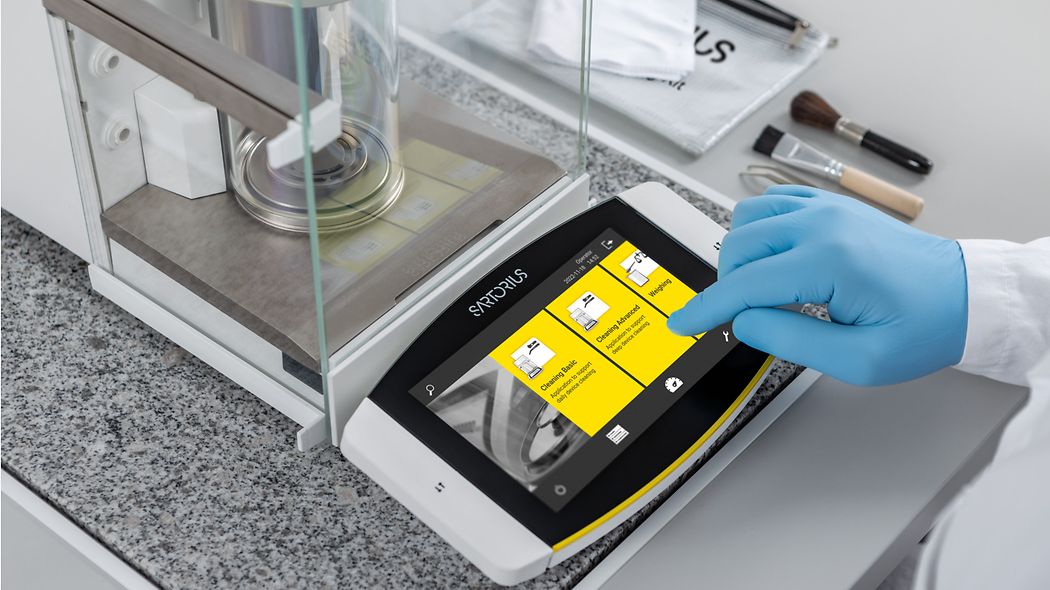
Modern connected balances now come with intuitive software and step-by-step picture-guided cleaning to support compliant weighing workflows. The design of the balance can also help, as some have hard-to-reach areas that are difficult to clean, even when the instrument is disassembled.
Solutions for Contaminant-Free Workflow
Sartorius offers several innovative solutions to maintain a clean and efficient workflow. For example, the Cubis® II MCA Balances have a Cleaning QApp that gives you step-by-step instructions for both routine and in-depth cleanings. The Ultra-High Resolution balances under the same brand can be disassembled and reassembled without tools, further simplifying the cleaning process.
Fully autoclavable Tacta® pipettes, when used with pre-sterilized Safetyspace® filter tips or Optifit standard tips, reduce contamination risk and make pipetting more efficient.
For microbial testing, Sartorius offers both culture-based testing and rapid solutions; the PCR-based Microsart® ATMP Sterile Release Kit provides results in just 3 hours. To learn about the complete offering for microbial enumeration, environmental monitoring, and sterile filtration, check out the resources below.


